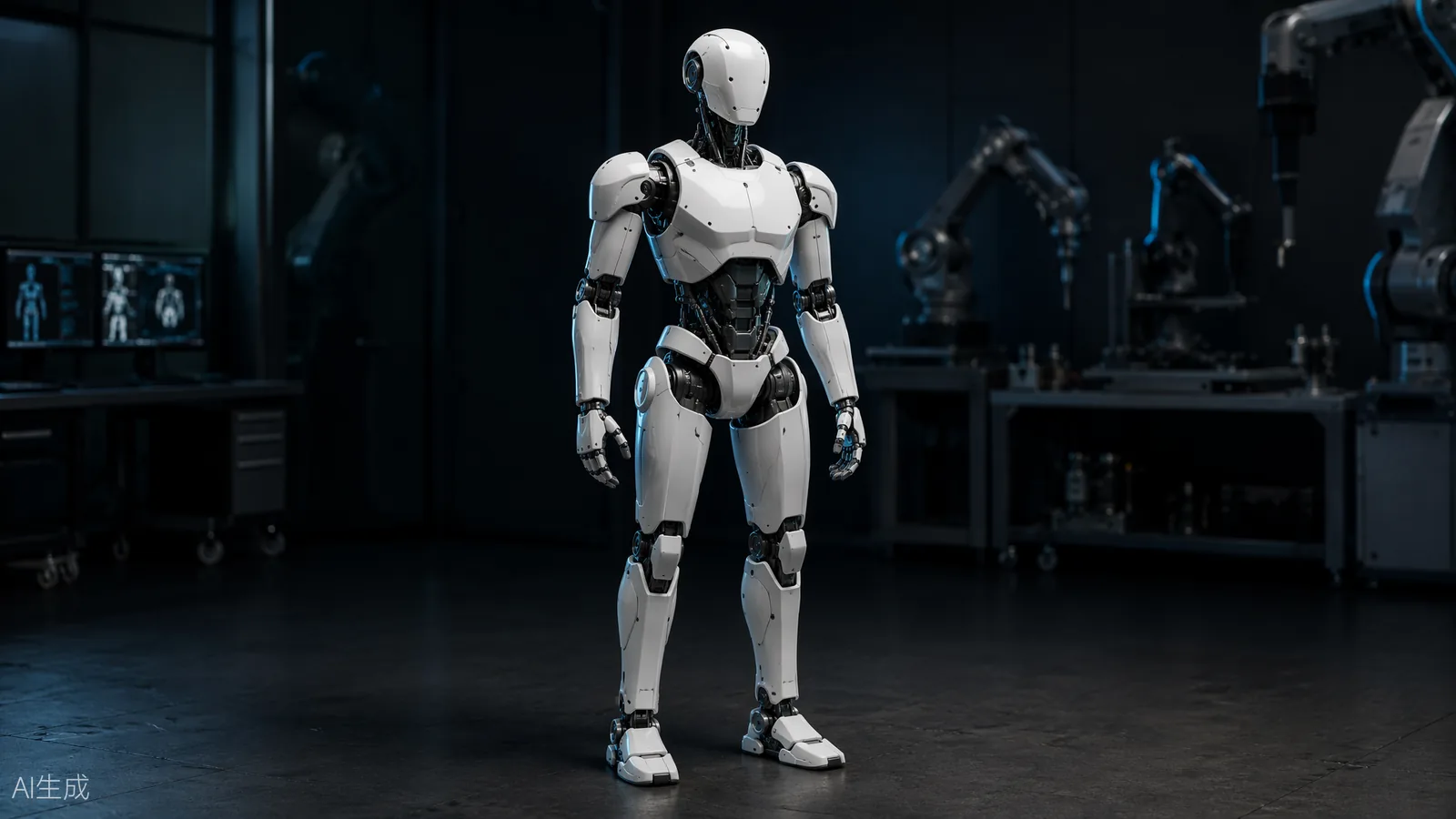
The EngineAI T800 went from teaser clips to fighting machine in a single evening. On July 16, 2026, at the opening gala of the URKL humanoid combat league in Shenzhen, it became the first full-size humanoid robot to compete in an organized public fight event — and within 24 hours, "t800 robot" was one of the fastest-growing search terms on the planet.
Like every entry in our database of combat robots, this profile gathers every specification EngineAI and Chinese media have actually published, what those numbers mean in engineering terms, and — just as important — what has not been disclosed yet. Where a figure is not officially available, we say so rather than guess.
T800 at a glance
The specification table below summarizes what is confirmed. Details and context follow in the next sections.
| Attribute | Value |
|---|---|
| Manufacturer | EngineAI (众擎机器人), Shenzhen, China |
| Height | 173 cm (reported) |
| Weight | approximately 80 kg (reported) |
| Maximum joint torque | 450 N·m (manufacturer figure) |
| Battery life | 4-5 hours (manufacturer figure) |
| Price | approx. 180,000-360,000 yuan depending on version (~$25,000-$50,000) |
| Degrees of freedom | not disclosed |
| Maximum walking speed | not disclosed |
| Combat debut | URKL opening event, Shenzhen, July 16, 2026 |
Design and build: deliberately human-sized
At approximately 173 cm, the T800 is built at average adult human height. This is a design statement, not a coincidence: the URKL league sells the spectacle of a human-like fight — footwork, guard, strikes — and that only works if the machine reads as a person in the arena.
The name is an unapologetic nod to the Terminator franchise, and EngineAI leans into the aesthetic: a bare, mechanical-looking frame rather than the friendly white plastic shell of service robots. Underneath, the platform shares its architecture with EngineAI's broader humanoid lineup, developed in Shenzhen — the city that has become the epicenter of the humanoid robotics industry. Other machines from this ecosystem join the Robot Database as their specifications are confirmed.
Power and actuation: the 450 N·m headline figure
The specification that matters most for combat is maximum joint torque: 450 N·m, according to the manufacturer. Torque is what determines whether a humanoid can throw a meaningful strike, stabilize itself after being hit, and — the hardest problem in bipedal robotics — recover from the ground without human help.
To put the engineering in perspective: getting knocked down and standing back up requires coordinated high-torque bursts across the ankles, knees, hips and spine, in a machine weighing roughly 80 kg. The footage from the URKL opening event shows the T800 doing exactly that, which places its actuation and balance-control stack among the most capable demonstrated publicly to date.
Battery and endurance
EngineAI states 4 to 5 hours of battery life in standard operation. Treat that as a lab figure: combat duty — repeated acceleration, impacts, get-ups — draws far more power than walking demos, and the league has not published fight-specific endurance data. For a league format, the practical implication is that battery swaps or short fight formats are more likely than hour-long bouts.
The combat debut: what the first fights showed
At the URKL opening event in Shenzhen — broadcast on Guangdong TV — the T800 fought in an arena format in front of a live audience. Three engineering observations from the published footage:
- Striking is real, if supervised. The robots throw punches and kicks with visible commitment; this is not the slow-motion shadow-boxing of trade-show demos.
- Falls happen — and recoveries too. Knockdowns occurred, and the robots' ability to stand back up unassisted was arguably the most technically impressive part of the evening.
- Humans remain in the loop. Safety crews stayed close, and the exact autonomy level during bouts has not been formally documented. Expect this to be formalized as the league matures.
Price and positioning
Chinese media report a price of roughly 180,000 to 360,000 yuan depending on the version — approximately $25,000 to $50,000. That positions the T800 as a professional development platform: research labs, universities, companies and, presumably, future URKL teams. It is not a consumer product, and it does not pretend to be one.
What has not been disclosed
Serious analysis requires listing the gaps. As of today, EngineAI has not publicly confirmed:
- Degrees of freedom per limb and total DOF
- Maximum walking and running speeds
- Sensor suite details (cameras, depth sensors, IMU configuration)
- Onboard compute platform and AI stack
- Combat-specific durability testing or damage tolerance
- The precise autonomy protocol used in URKL bouts
We will update this profile as official documentation appears — and only then.
What comes next for the T800
The open questions are bigger than any single spec: will rival humanoids (Unitree's platforms are the obvious candidates) enter the URKL arena, and will EngineAI publish a formal technical rulebook for fights — weight classes, allowed strikes, autonomy limits? The answers will determine whether URKL becomes a genuine sport or remains a spectacular showcase. This profile is the reference page for the T800 on this site: it will be updated with every confirmed specification, and our upcoming comparisons (starting with T800 vs Unitree G1) will be linked from here.